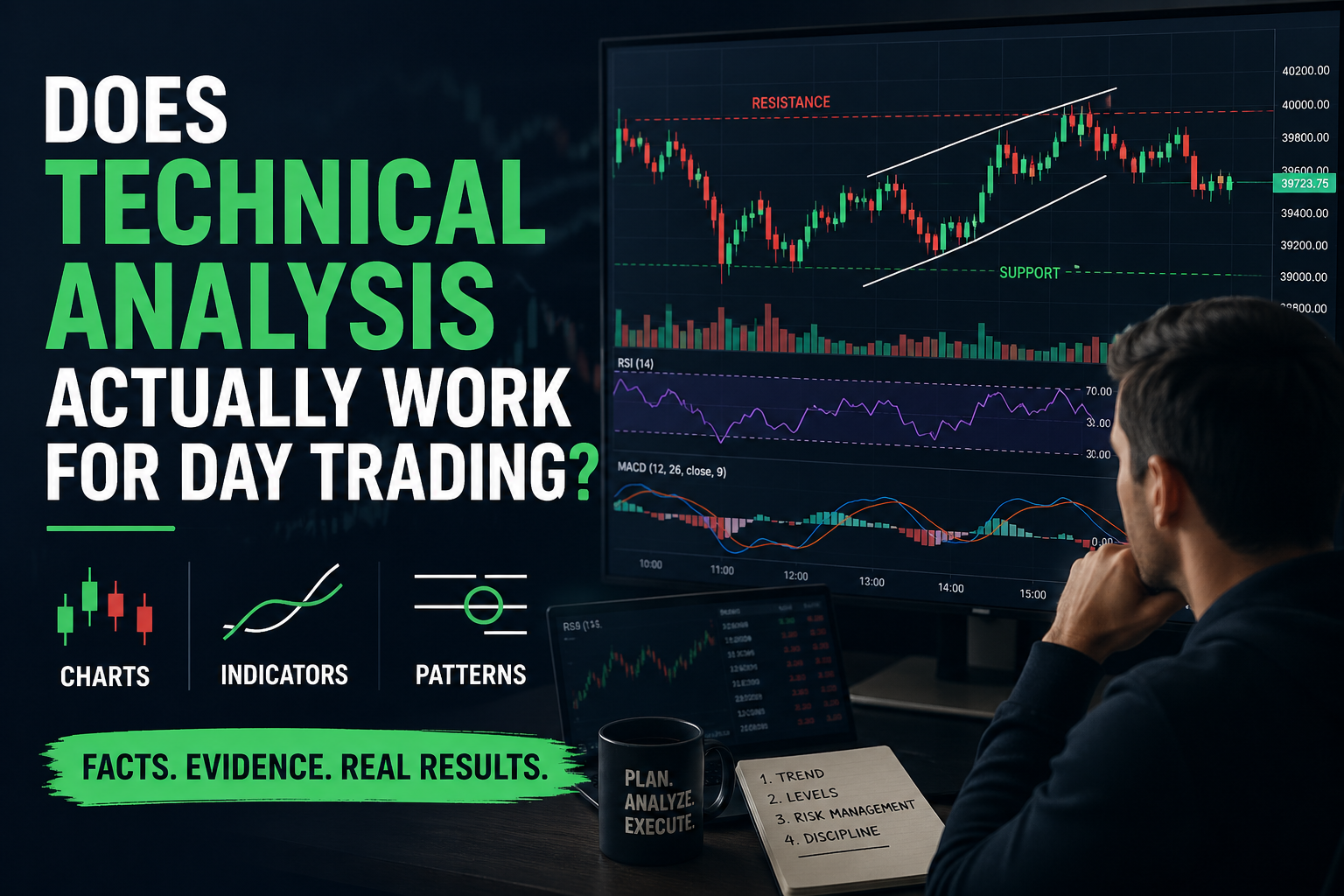
Does Technical Analysis Actually Work for Day Trading?
After 35 years in dealing rooms, I can tell you one thing for certain: every trader holding a real position is looking at their charts. Whether they are chart-driven or use them sparingly to check historical price levels, technical analysis (TA) is the pulse of the professional trading floor.
Interestingly, I’ve had traders swear they don’t use charts while simultaneously asking for my stop-loss levels. Using a professional chartist's stops is, by definition, using technical analysis—even if they don't want to admit it!
Is Technical Analysis Just Guesswork?
In trading communities, TA is often polarised as either a "roadmap to riches" or "financial astrology." The truth is somewhere in the middle: it works, but only when you stop expecting it to predict the future. At its core, TA is actually behavioural analysis. Markets move because people react emotionally, and those reactions create repeatable patterns. Using charts isn't about certainty; it’s about trading probabilities.
Why It Works: The Self-Fulfilling Prophecy
Technical analysis often works because of collective behaviour. A lot of people buying create an uptrend.
However, beginners often fall into "analysis paralysis" by piling on too many indicators. It takes years of experience to realise that more tools don't equal more profit; they often just create confusion.
The 3 Pillars of Successful Technical Trading
- Discipline: TA enforces a rules-based approach. If a bullish trend line breaks, it forces you to question your bias and reduce exposure.
- Context: A chart doesn’t exist in a vacuum. High-conviction trades happen when technical setups align with fundamental drivers like news and economic data.
- Risk Management: This is the "missing ingredient." You can be right 60% of the time and still go broke without discipline. Professional traders use TA to structure their risk, not just to find entries.
The Verdict: Probabilities Over Certainty
Does technical analysis work for day trading? Yes, but only if you use it to manage risk rather than chase guarantees.
A single trade is irrelevant; what matters is whether your approach holds up over a large sample size. If you treat TA as a tool for discipline and structure, it becomes the bridge between gambling and professional trading. That is what separates those who last in this business from those who don't.
By Karen Jones FSTA Professional Technical Analyst and Content Creator for the STA
Karen Jones LinkedIn profile linkedin.com/in/karen-jones-fsta-a2907b9
#MarketOutlook #InvestingStrategy #Gold #Commodities #StockMarket #MacroEconomics #FinancialReset #RecessionWatch #Inflation #WealthBuilding #EconomicCycles #Trading #GlobalMarkets #InvestmentInsights