Does Technical Analysis Share a Pillar with Alchemy?
At our recent Society meeting, we heard a fascinating talk from Guido Riolo built around an unexpected question:
Does Technical Analysis Share a Pillar with Alchemy?
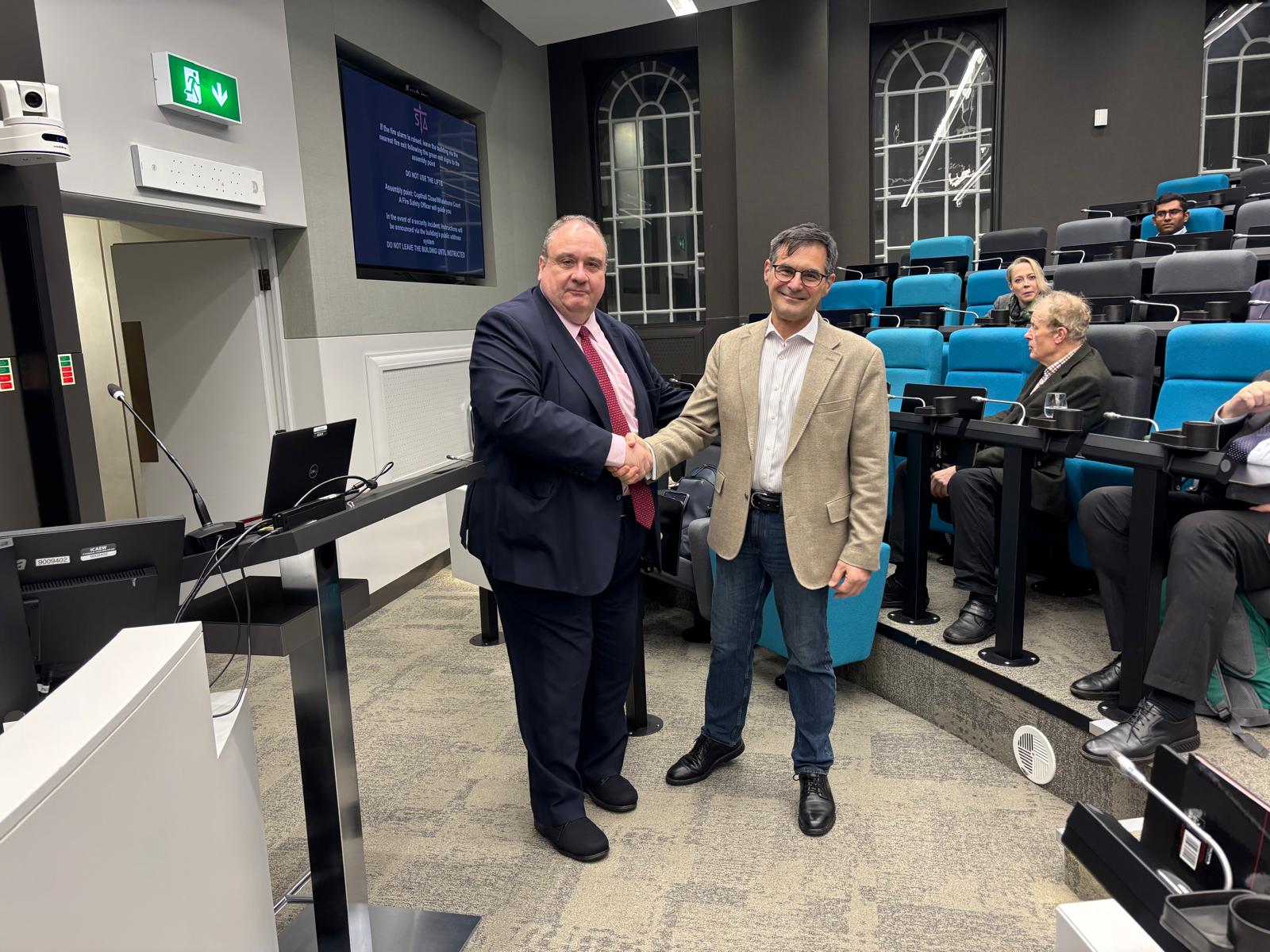
The evening also opened on a celebratory note, with James Eptas receiving the Bronwyn Wood Award for outstanding exam results — a reminder of the depth of talent in our community.
From Fundamentals to Charts
Guido began by sharing his own journey. Like many analysts, he started with fundamentals before discovering technical analysis through early career interviews and real-world market demands.
A defining trait, he explained, was learning to say “I don’t know” — and then going away to learn it properly. That mindset led him into technical analysis, a long career at Bloomberg, and later hedge fund investing.
Ironically, tools he initially resisted — Elliott Wave, Ichimoku, and DeMark — eventually became central to his process.
His conclusion?
It’s not technical versus fundamental.
It’s good analysts versus bad analysts — regardless of discipline.
What Alchemists and Technicians Have in Common
Historically, alchemists weren’t just chasing gold. They were relentless experimenters, working outside established institutions, focused on what worked in practice.
Even figures like Isaac Newton and Galileo Galilei considered themselves alchemists.
Guido highlighted striking parallels with modern technical analysts:
- We experiment constantly with methods and indicators
- We care about results first
- We often don’t worry why a pattern works — only that it does
- We can be surprisingly secretive about our edge
- We operate largely outside academia
Like alchemy, technical analysis thrives on open experimentation and creativity.
Outsiders — but Accountable
Technical analysts are still outsiders in much of the investment world. In some firms, openly identifying as a technician can feel risky, so many practitioners quietly blend charts with fundamental narratives.
But Guido drew an important distinction:
Unlike alchemists, we don’t get unlimited time to be wrong.
Markets are brutally competitive. Bad ideas are quickly punished. Analysts must produce working insights from day one — which forces honesty, refinement, and evolution.
That pressure keeps technical analysis grounded in reality.
Often Ahead of the Curve
Technicians were early explorers of ideas that later became mainstream:
- Market psychology
- Momentum
- Quantitative pattern recognition
- Market timing
Long before these concepts were formalised in academia, technicians were already applying them to live price data.
That’s something to be proud of.
The Real Risk
The real danger today isn’t that technical analysis resembles alchemy.
It’s that too many unqualified voices claim to practise it.
With online content everywhere, it’s easy to present yourself as a technician without proper training. Guido stressed the importance of professional standards, education, and stronger links with universities to protect the credibility of the field.
So… Are We Alchemists?
In some ways, yes:
Both communities are creative, experimental, and focused on transformation.
But there’s a crucial difference.
Technical analysts are accountable to markets every single day.
We test ideas in real time. We discard what doesn’t work. We keep what survives.
And that, Guido concluded, defines us:
An open-minded, inventive community that gives every idea a fair chance — and lets reality decide.